Workshop in Stockholm: Groundbreaking Digitalization of the ATA Carnet System

The wave of digitalization is reaching more export documents, and now it’s the ATA Carnet’s turn

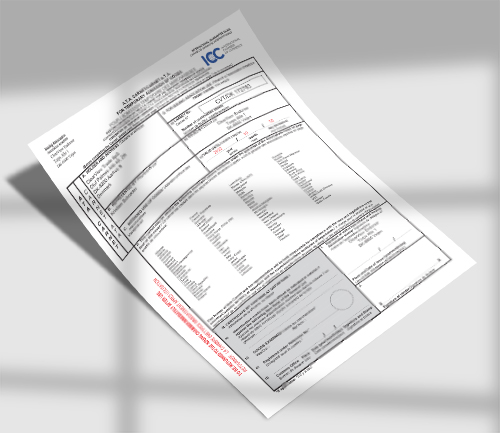
The International Chamber of Commerce (ICC), in collaboration with the World Chambers Federation (WCF), is spearheading the digitalization of the ATA Carnet system. This initiative involves national chambers of commerce in participating countries, as these organizations have traditionally issued and approved ATA Carnets.

Contenera at the Table in Stockholm

As part of the process, the Stockholm Chamber of Commerce hosted a workshop on January 16, 2025, about the eATA Carnet project. The agenda included joint training for customs authorities and chambers of commerce from Sweden, Norway, Finland, and Denmark, focusing on eATA—a groundbreaking digitalization of the ATA Carnet system.

We sent a delegation to support the Confederation of Danish Enterprise from the technical side. Together with Danish chambers of commerce, we have developed a digital solution enabling Danish companies to apply for and issue digital eATA Carnets.

The Result? Fewer Papers, Less Hassle, and a Streamlined Process

The aim of the ATA Carnet digitalization is to eliminate the need for paper forms and introduce a digital platform for creating, tracking, and processing documents. The digital transition will make the process faster, more secure, and more user-friendly.

The project is already in a pilot phase in selected countries, where experiences are being used to prepare for broader implementation. The goal is full digitalization of the ATA Carnet system, making international trade easier to manage.

What is eATA, and Why is it Important?

The ATA Carnet is used by businesses in over 80 countries for the temporary import of goods such as trade show items, exhibitions, product samples, and TV production equipment. It saves companies from paying VAT and customs duties in the host country. eATA digitizes this system, reducing paperwork and simplifying the process for both users and customs authorities.

In short, digital ATA Carnets make it easier to manage the temporary export and import of goods.

Danish Participation and Our Role

In collaboration with the Confederation of Danish Enterprise and Danish chambers of commerce, we at Contenera have developed an essential integration for the eATA Core system called “Mercury II.”

This ensures that we continue to deliver an efficient and user-friendly solution to Danish chambers of commerce, which handle thousands of carnets, certificates of origin, and endorsements via the Contenera platform/white-label solutions.

Contenera’s eATA integration development has been implemented in stages, with the main part completed in early 2024. However, full implementation depends on coordination between national customs authorities and the EU.

International Perspective

The eATA solution is expected to be a success for Danish chambers of commerce and has the potential to play a significant role internationally, benefiting chambers of commerce in Germany, Finland, the USA, and beyond.

eATA

Highlights from the Meeting

Discussions focused on how customs authorities should handle the new digital Carnets and ensure a smooth transition.

Key participants included:

  • Pia Lind from the Confederation of Danish Enterprise (Dansk Erhverv), the Danish coordinator for eATA and the National Guarantee Organization
  • Marco De Nobili, ATA Carnet coordinator at the ICC (International Chamber of Commerce)
  • Davor Antonic-McKinley from London Chamber of Commerce, who shared experiences from the eATA pilot project

What Does the Future Hold?

We are working closely with all parties to ensure Danish businesses have a seamless experience with eATA. At the same time, we support chambers of commerce in their guidance efforts to help their customers effectively.

eATA represents the future, making cross-border trade easier, faster, and more environmentally friendly.

Status and Timeline for eATA

the ATA chain, as the ATA Carnet is a customs document. Within the EU, customs implementation is centrally managed by TAXUD (the European Commission’s Directorate-General for Taxation and Customs Union). The go-live date for the EU is planned for 2026, with a transition phase until 2028, during which all countries in the ATA chain must onboard.

Learn more: See the list of contries and their processes.

Contenera - ATA Carnet

Behind ATA

What is an ATA Carnet?

The ATA Carnet functions as a “passport” for goods, allowing temporary importation to multiple countries without paying customs duties, VAT, or other import taxes. It is an essential tool for international trade and export as it reduces bureaucracy and costs. The document is valid for up to one year and is accepted in more than 80 countries.

Why Digitalization?

  1. Efficiency: A digital solution will reduce the administrative burden for businesses and customs authorities. It will simplify the creation and management of ATA Carnets
  2. Security: Digital documents are harder to forge than paper-based ones. This helps combat fraud and errors
  3. Environmentally Friendly: Transitioning to a paperless process will reduce paper consumption and have a positive environmental impact
  4. Real-Time Tracking: Digitalization allows businesses and authorities to track the status and movement of Carnets in real-time
  5. Global Trade Needs: Increasing globalization and the demand for more agile and modern trade tools make digitalization essential
Contenera i Stockholm

In the photo, from left to right, are product designer Kristian Schrøder from Contenera, 
legalization consultant Lone Andersen fromthe Confederation of Danish Enterprise, and Carnet manager Pia Lind.

News you might find interesting

ATA Carnet

IT solution to manage your ATA Carnets

We offer an affordable IT-solution to manage and issue your ATA Carnets.

Our solution offers a complete workflow and life-cycle management for ATA Carnets for both chamers of commerce and exporting businesses.

Read more »